Ecological wetlands: Turning wastewater into a resource
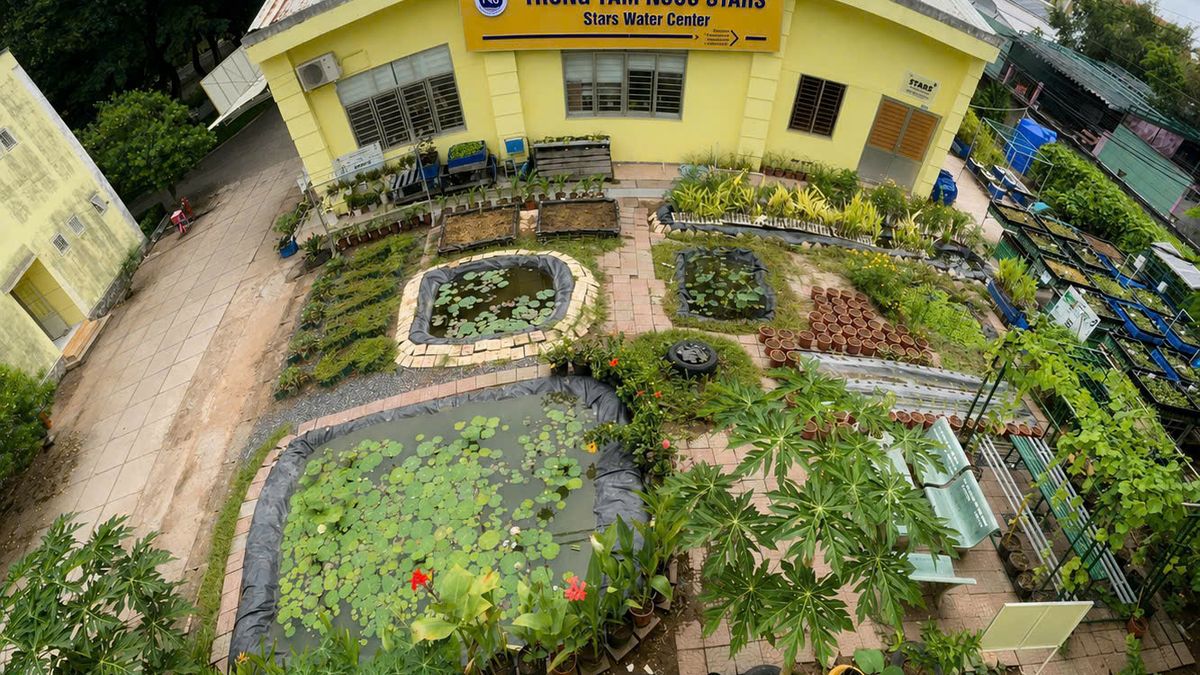
The ecological wetland model combines treatment stages using native plants and reused materials to treat domestic wastewater and provide water for irrigation, while creating a hands-on STEM learning space within a green landscape.
- Timeline
- 2025
- Location
- Tra Vinh University and Hòa Minh Secondary School · Vĩnh Long
- Status
- Active
The context
Treating wastewater with plants and locally available materials.
Many rural areas of the Mekong Delta lack centralised wastewater collection and treatment. Domestic wastewater may flow directly into canals and the surrounding environment, while complex treatment technologies often carry high installation and operating costs.
The ecological wetland model uses a sequence of natural biological treatment stages with plants and materials that can be sourced or reused locally. Water passes through each treatment area before being reused for irrigation, turning wastewater into a resource for landscaping and farming.
The system is also arranged as an open ecological space. Plants, ponds, and filter layers can be observed and cared for directly, allowing the treatment site to double as a place for practical learning about water, the environment, and nature-based solutions.
Scale and recognition
Five treatment stages, two pilot sites, and recognition from UNESCO.
Biological filter and wetland stages arranged in sequence.
Pilot sites at Tra Vinh University and Hòa Minh Secondary School.
Year the project was named among the top three initiatives in UNESCO's Water Challenge for Young Innovators.
Treatment flow
Water passes through five successive biological treatment stages.
Pandan tank — Helps reduce odour and organic load at the beginning of treatment.
- 1
Pandan tank
Helps reduce odour and organic load at the beginning of treatment.
- 2
Water hyacinth tank
Provides aquatic plants that take up some nutrients and pollutants.
- 3
Bird-of-paradise wetland
Water passes through gravel, sand, and reused filter media, as well as the plants' root zone.
- 4
Red canna (Canna indica) bed
Adds another planting stage to help remove remaining organic matter and pollutants.
- 5
Three lotus ponds
Complete the treatment flow while creating a landscape and adding ecological value.
Education and research
Turning a treatment facility into a living laboratory.
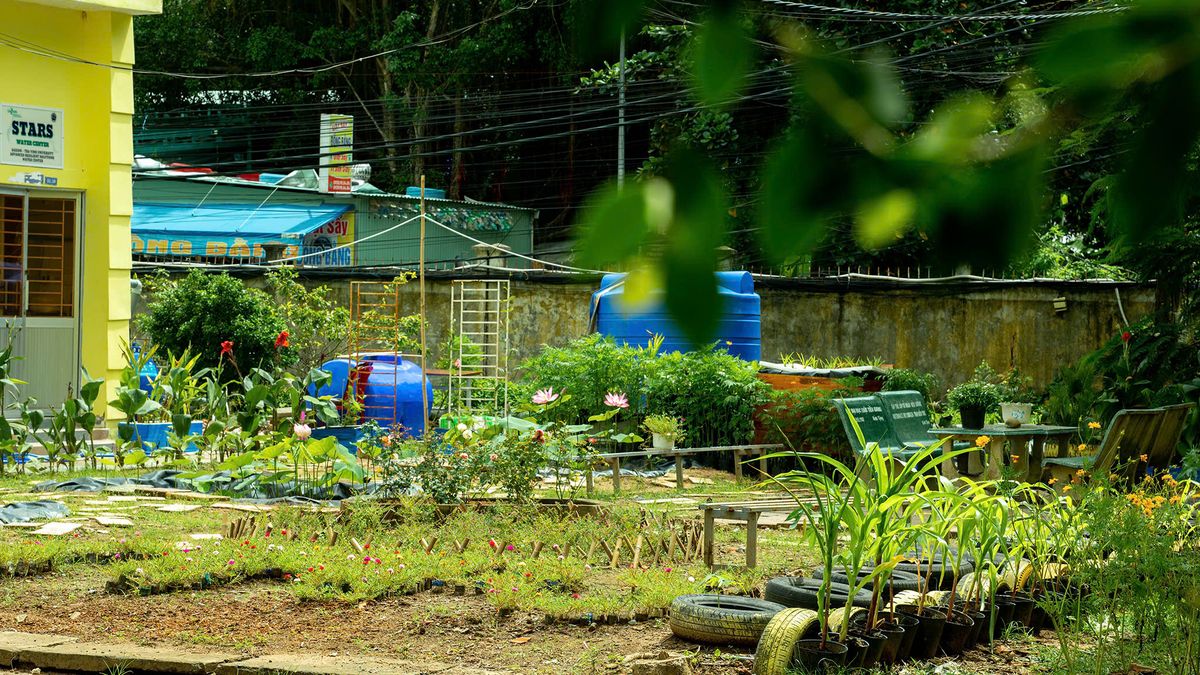
The model has been implemented at Tra Vinh University and Hòa Minh Secondary School. Its treatment stages are placed in an open setting, allowing learners to follow the water flow, care for plants, and observe the role of each stage rather than seeing only an enclosed device.
This design lets an environmental facility serve research, STEM learning, and community outreach at the same time. Learners can explore water reuse and the role of plants in wastewater treatment firsthand.