Floating wetlands: From plastic waste to greenery on the water
The model reuses plastic to create floating structures for native aquatic plants, helping improve water quality, provide habitat, and offer a green solution for canals, lakes, and community spaces.
- Timeline
- 2025
- Location
- Mekong Delta · Vietnam
- Status
- Active
Partners

The context
Turning recycled plastic into a base for life on the water.
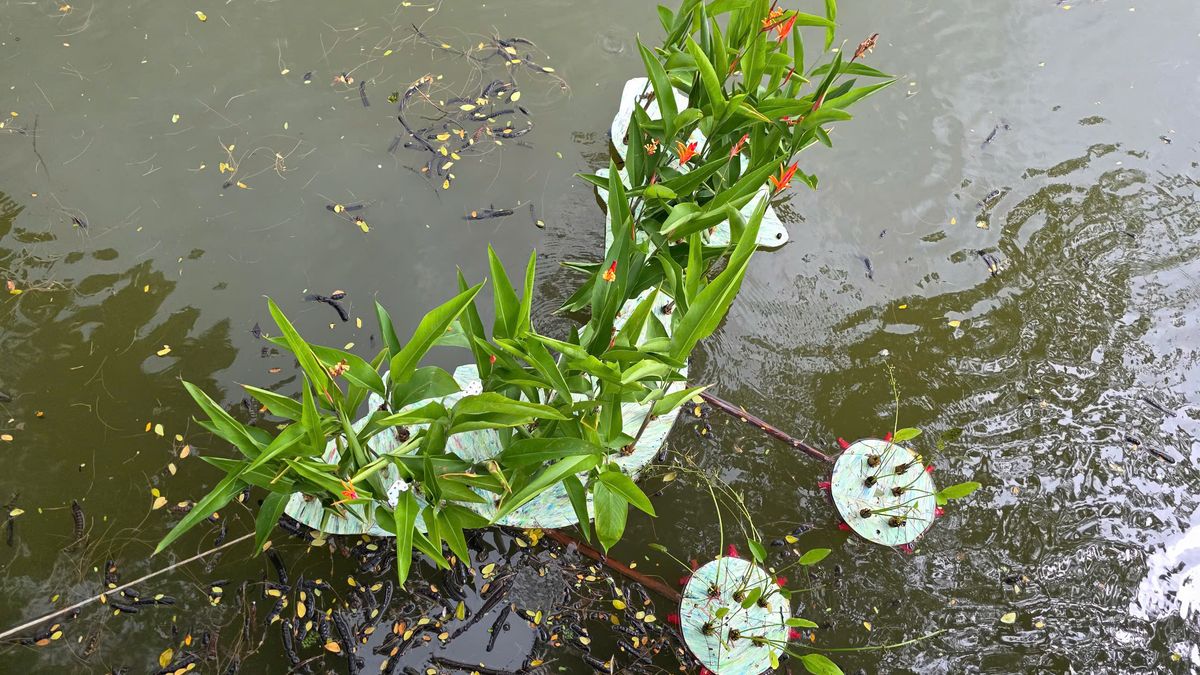
Urban canals and lakes can face declining water quality, plastic waste, and a loss of aquatic habitat at the same time. The floating wetland model aims to address these issues together: reused plastic forms the floating structure, which supports native plants adapted to wet conditions.
Plant roots and growing media support natural biological processes that help clean the water. Vegetation on the surface also adds habitat, linking water-quality improvement with material reuse and ecosystem restoration.
The modular design, accessible materials, and replaceable parts make the model suitable for demonstration sites, schools, and community spaces that need a visible, maintainable solution adaptable to local conditions.
Integrated design
Recycled materials, plants, and habitat in one floating module.
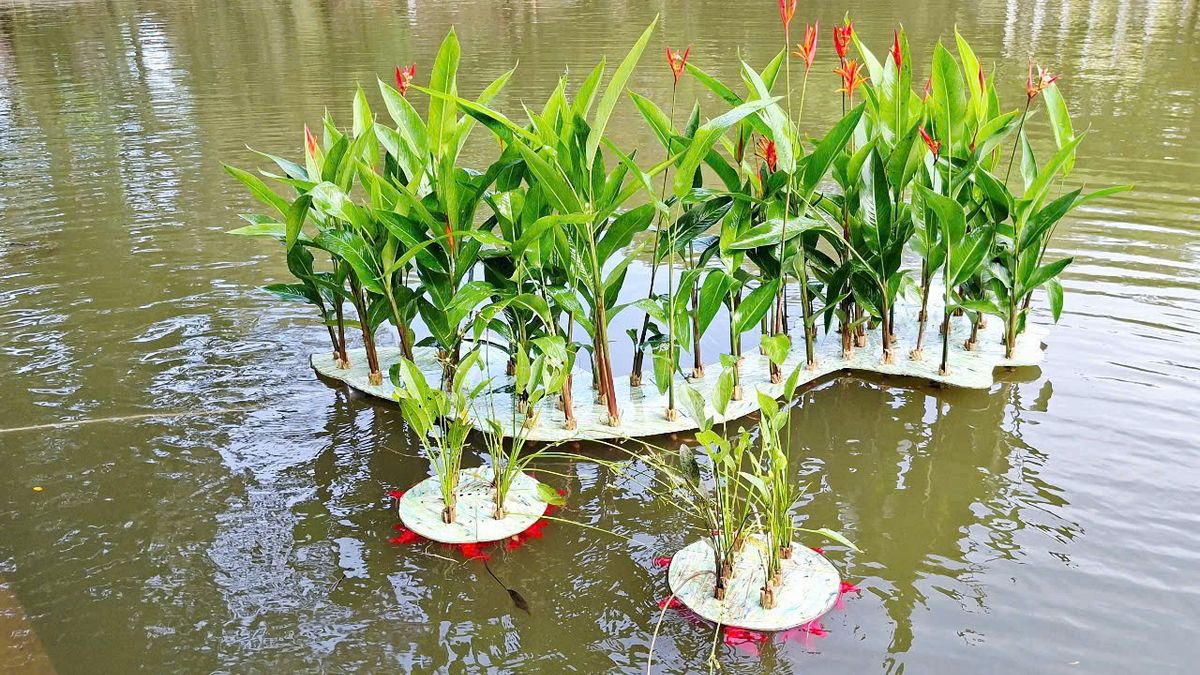
The floating modules are made from reused plastic and support aquatic plants. Their roots grow directly in the water, providing surfaces for biological processes involved in treatment while adding habitat structure.
Every water body differs in water quality, flow, and available space. The model is therefore designed to be flexible: module size, planting density, and placement can be adjusted, while water quality is monitored to assess performance at each site.
Potential applications
Flexible modules for canals, lakes, and learning spaces.
Modular and easy to maintain — The simple structure allows plants to be replaced or individual parts repaired without disturbing the whole system.
- 01
Modular and easy to maintain
The simple structure allows plants to be replaced or individual parts repaired without disturbing the whole system.
- 02
Putting recycled material to work
Reuse plastic in a functional application, connecting waste reduction with green infrastructure.
- 03
Suitable for community education
The visible model can support learning, environmental monitoring, and practical activities at schools.