A luffa model for nutrition and green livelihoods
Developing a circular luffa model that uses the fruit, fibre, leaves, and other by-products to make food and biomaterials and create more livelihood opportunities for Mekong Delta communities.
- Timeline
- 2026
- Location
- Mekong Delta · Tra Vinh University
- Status
- Active
Partners




The context
One luffa plant, many uses within a circular model.
Drought, saltwater intrusion, and changing livelihoods are driving demand for farming models that suit local conditions and create more value from crops. The EverGreen team and STARS Water Center have chosen luffa, a familiar crop in the Mekong Delta, to develop a circular model that uses more of the plant than its young fruit alone.
Young fruit is eaten; fibres from mature fruit are being developed for biomaterial applications; and leaves and other by-products are composted and returned to the soil. The project is also testing luffa-based products to expand the crop's value after harvest.
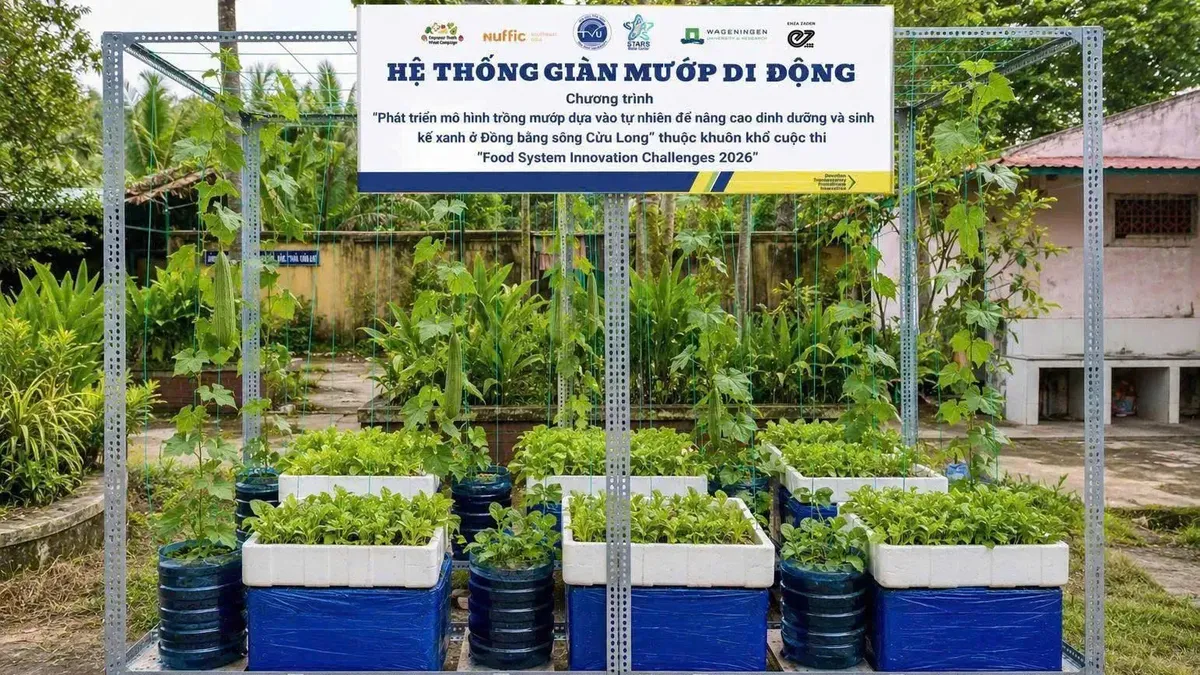
Mobile luffa gardens and demonstrations bring this cycle into learning spaces. Students and community members can observe cultivation, harvesting, and product development. The EverGreen team has tested luffa-based foods, luffa leaf tea, and fibre materials. These applications need further assessment before production can expand.
A circular model
Making use of the luffa plant throughout its life cycle.
Young fruit is used as food; fibres from mature fruit are being developed for biomaterials, including experimental luffa-fibre filtration materials; and leaves and by-products are composted to add organic matter to the soil. The project is also developing nutrition product samples to explore further uses for local crops.
Using more parts of the plant reduces waste and opens new product opportunities from the same growing area. Once refined at a suitable scale, the model could help farming households diversify products and income while continuing to grow a familiar crop.
Potential benefits
Nutrition, materials, and livelihoods in one model.
Each part of the luffa plant is being developed for a different use, while by-products return to the growing cycle.
- 01
Nutrition
Use the edible parts as local food and a basis for higher-value products.
- 02
Biomaterials
Use mature luffa fibre for biomaterials and water-filtration trials.
- 03
Livelihoods and learning
Connect growers, students, and schools through demonstrations, product trials, and environmental education.