Circular aquaponics: A water-saving model for cities
Developing closed-loop aquaponics systems that draw on alternative water sources and reused materials to produce food in settings ranging from homes and schools to urban farms.
- Timeline
- 2024–2027
- Location
- Tra Vinh University · Mekong Delta
- Status
- Active
The context
Growing fish and vegetables in a closed water loop.
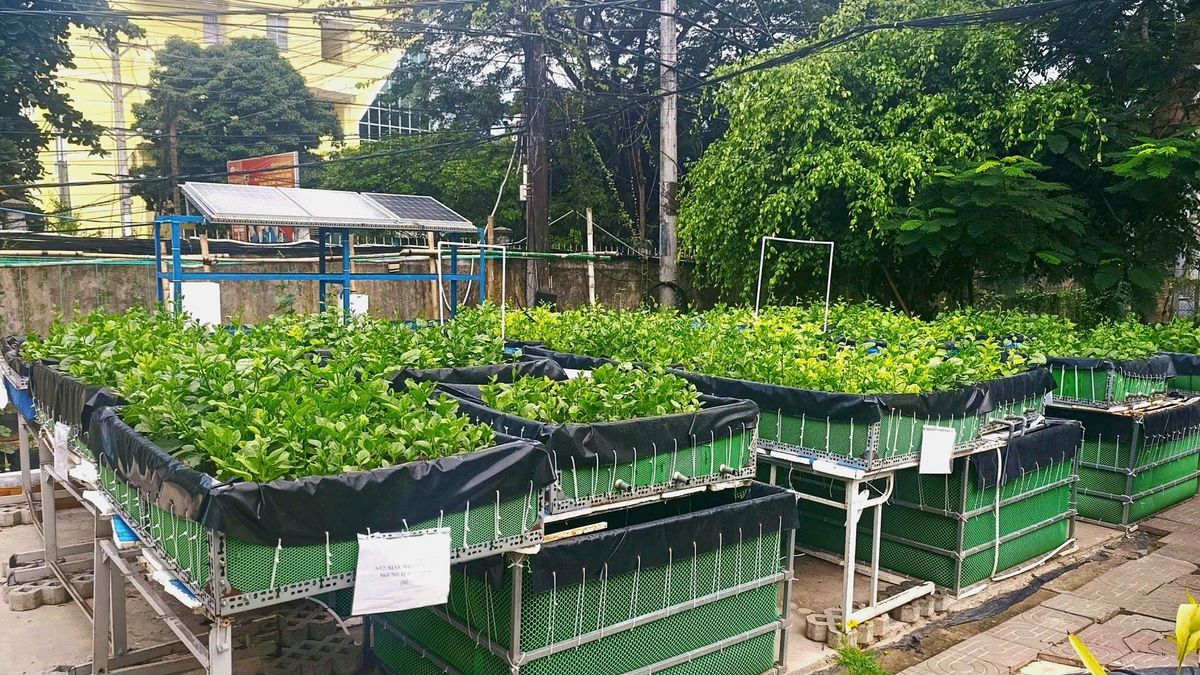
Aquaponics links fish tanks and plant beds in one circulating water system. Microorganisms convert fish waste into nutrients for plants. After flowing through the growing beds and biological filter, water returns to the fish tank instead of being continually discharged and replaced.
STARS Water Center is developing four configurations for different settings, from indoor and household systems to a model intended for larger-scale production. The systems are also used to test alternative sources, including rainwater, surface water, and air-conditioner condensate.
Because water flows and biological processes are visible, the model is also a learning platform for the connections among water, nutrients, plants, fish, and energy in a circular system.
Scale and water efficiency
Four configurations, with water savings of up to 90%.
Configurations developed for different settings.
Water savings that the system may achieve through recirculation.
Water, fish, plants
Water circulates among fish, plants, and filtration.
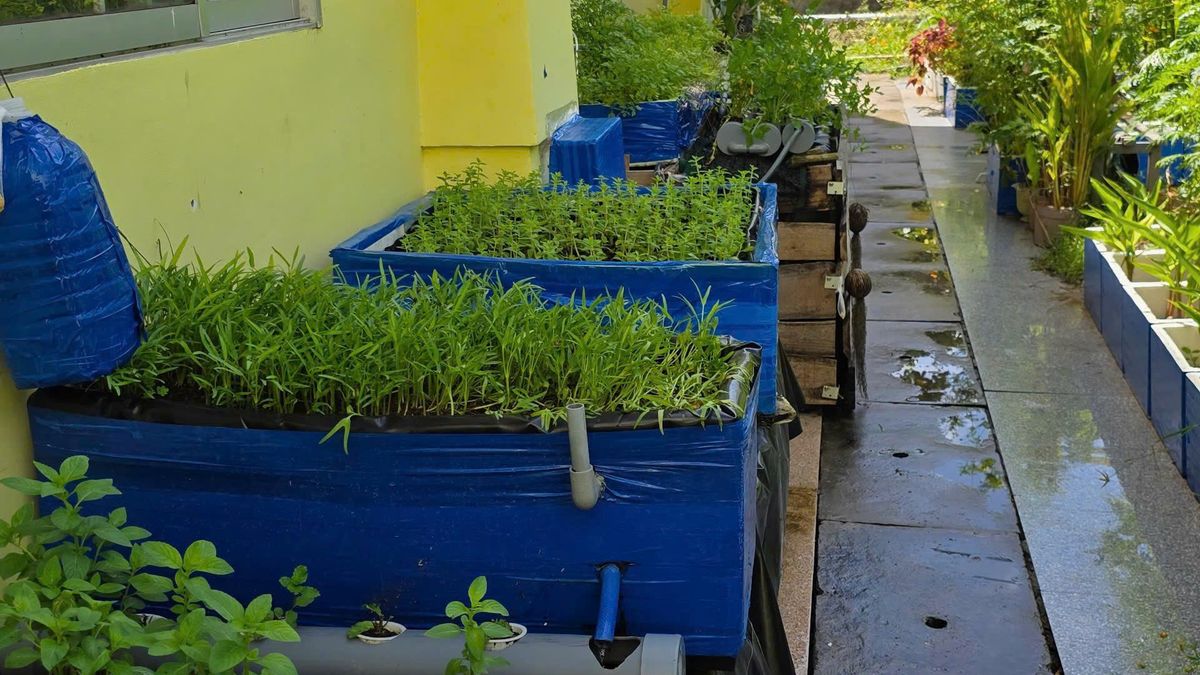
In an aquaponics system, microorganisms convert fish waste into nutrients. Plants take up those nutrients, while their roots and a biological filter help clean the water before it returns to the fish tank. The closed loop reduces the need for water replacement and keeps nutrients in the system.
The project is also testing rainwater, surface water, and air-conditioner condensate as supplementary sources. Each source needs appropriate quality assessment and treatment before entering the system to maintain suitable conditions for fish and plants.
Applications
From learning spaces to urban food production.
Indoors and in landscaped spaces — Combine fish and plants in a compact circulating system suited to learning, demonstrations, or indoor landscaping.
- 01
Indoors and in landscaped spaces
Combine fish and plants in a compact circulating system suited to learning, demonstrations, or indoor landscaping.
- 02
Households
A compact setup for a balcony, rooftop, or yard, intended to provide vegetables and fish close to home.
- 03
Larger-scale production
Expand the tanks and growing area to test whether output can be maintained under controlled conditions.
- 04
Research platform
Monitor water quality, water-use efficiency, and fish and plant responses in an integrated system.