Clean water, brighter futures at Hòa Minh Primary School
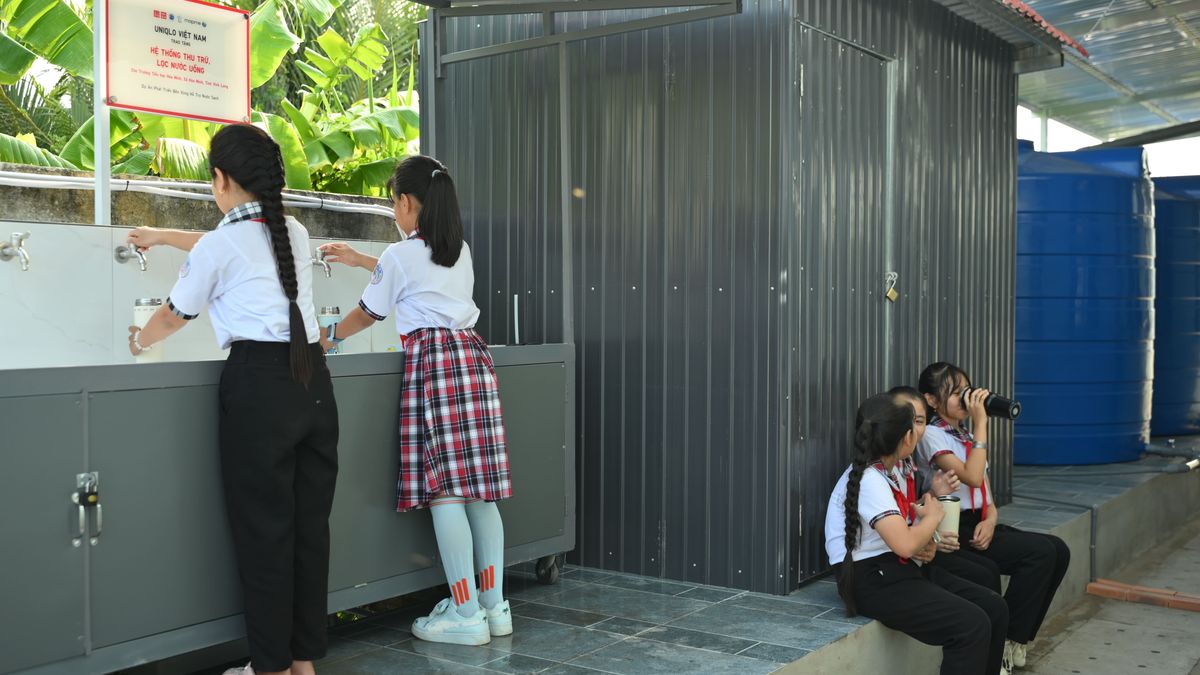
The project combines a drinking-water collection, storage, and filtration system with a constructed wetland at Hòa Minh Primary School. It serves 540 pupils, teachers, and staff and reuses treated wastewater to irrigate the school grounds.
- Timeline
- 2026–2027
- Location
- Hòa Minh Primary School · Vĩnh Long
- Status
- Active
Partners



The context
Managing clean water and wastewater as part of the same school water cycle.
Hòa Minh is an island commune that often faces freshwater shortages and saltwater intrusion during the dry season. At a school serving hundreds of pupils and staff, safe drinking water and wastewater management both need attention.
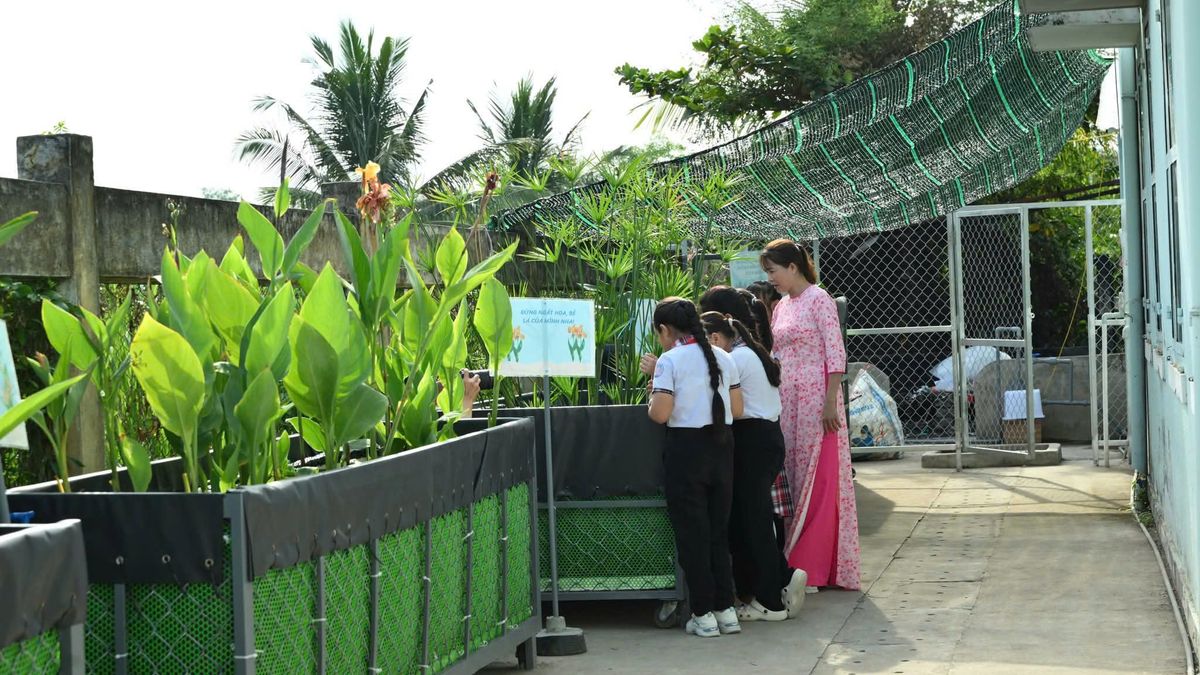
The project brings two components together in one system. Rainwater is collected in a 20,000-litre tank during the wet season and can be supplemented with piped water when needed in the dry season. It is filtered and disinfected with ultraviolet (UV) light before use. The school's wastewater flows through a planted constructed wetland for treatment before being reused to irrigate and maintain the grounds.
With each stage located on campus, the system meets an essential daily need and provides a visible example of the water cycle. Pupils can see water being collected, treated, used, and returned to the green space for a new purpose.
Project scale
20,000 litres of storage serving 540 pupils and school staff.
20,000 litres — Tank capacity for rainwater storage and supplementary piped water when needed.
Tank capacity for rainwater storage and supplementary piped water when needed.
Pupils, teachers, and staff supported with access to clean water at school.
Components: clean-water supply and wastewater treatment for reuse.
Integrated design
Managing clean water and wastewater within one system.
The collection and filtration system provides clean water when freshwater supplies are unreliable. Downstream, the wetland receives domestic wastewater, treats it through natural processes, and provides water for landscape irrigation. Together, the two components help the school manage water as a continuous cycle rather than addressing each need separately.
The open, visible design also allows the system to become part of learning at school. Alongside its daily practical value, it gives pupils firsthand exposure to clean water, water reuse, and nature-based solutions on campus.