Mekong Salinity Center: Field-tested responses to saltwater intrusion
The Mekong Salinity Center project tests water storage, treatment, and conservation solutions with farming households while building a network of lead farmers to share knowledge and expand community responses to drought and saltwater intrusion.
- Timeline
- 2023–2026
- Location
- Trà Vinh · Mekong Delta
- Status
- Completed
The context
Adapting to saltwater intrusion calls for solutions tested in real conditions.
Saltwater intrusion affects domestic water, agriculture, and livelihoods across the Mekong Delta. The Mekong Salinity Center was established as a platform for testing and sharing adaptation solutions in the field, where they can be assessed under local conditions.
The models range from rainwater storage and water treatment to hydroponics and wastewater-treatment wetlands. Two lead-farmer households in Hòa Lợi and Cồn Chim were selected as pilot and demonstration sites, allowing neighbours to see how each solution performs as water sources and salinity change with the seasons.
Pilot scale
Six groups of solutions tested with a network of lead farmers.
Groups of solutions deployed to test their suitability and potential for wider use.
Lead-farmer households hosting pilots in Hòa Lợi and Cồn Chim.
Field solutions
Six approaches to different adaptation needs.
Household rainwater storage — Improve access to freshwater stored on site for domestic use when outside supplies are unreliable.
- 01
Household rainwater storage
Improve access to freshwater stored on site for domestic use when outside supplies are unreliable.
- 02
Water storage for farming
Store water for irrigation and production during the dry season or periods of higher salinity.
- 03
Hydroponics
Test vegetable production in controlled systems that recirculate water at the pilot sites.
- 04
Surface-water treatment
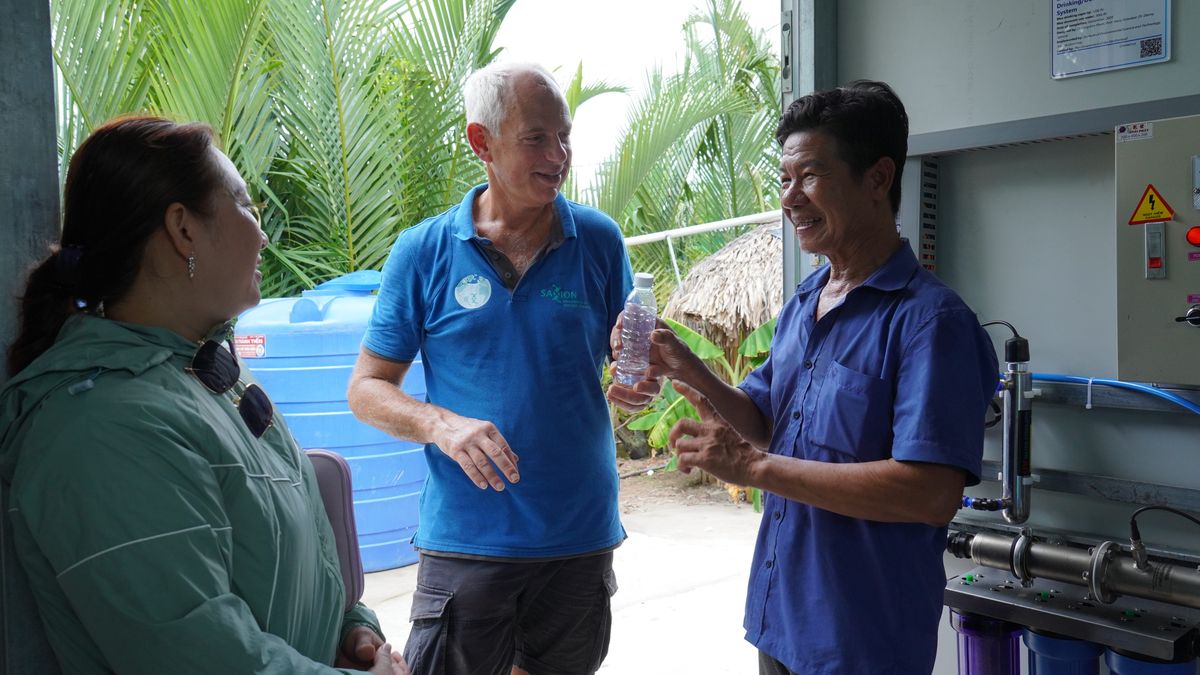
Test treatment options that make locally available surface water suitable for specific uses.
- 05
Treating rainwater for drinking
Combine storage, filtration, and disinfection to provide another source of safe drinking water at home.
- 06
Wastewater-treatment wetlands
Use plants and biological processes to treat wastewater and explore its reuse.
Project journey
From pilot sites to a network of lead farmers.
2023 · Phase 2 began — Tra Vinh University and Dutch partners opened a new phase of collaboration focused on locally applicable responses to drought and salinity.
- 1
Phase 2 began
Tra Vinh University and Dutch partners opened a new phase of collaboration focused on locally applicable responses to drought and salinity.
- 2
Models reached farms
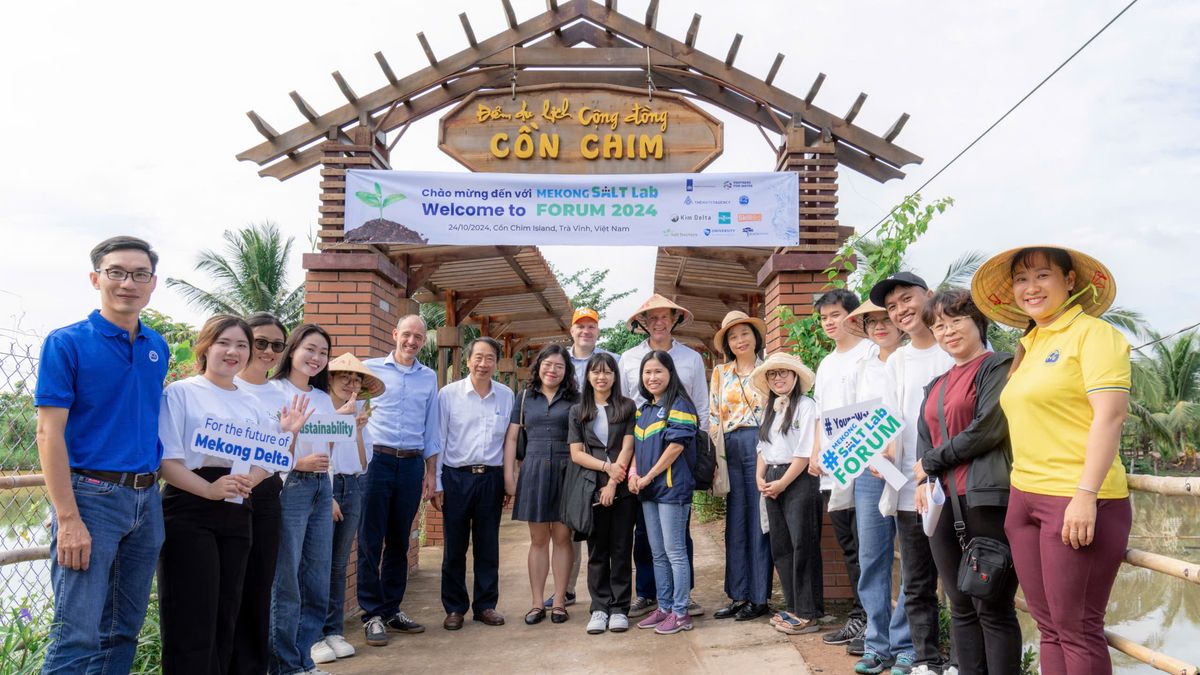
Solutions were introduced at two lead-farmer households in Hòa Lợi and Cồn Chim; the Mekong Salinity Center forum provided a place to share experiences and gather feedback.
- 3
Learning through farmer networks
Twelve lead farmers reviewed learning materials. A blend of in-person, online, and farmer-to-farmer learning helped reach more households.
- 4
Assessing impact and setting priorities
A workshop at Tra Vinh University brought together findings on water shortages, livelihoods, early warning, and the need for long-term solutions.
Sharing knowledge
Knowledge passed on by the people using the models.
The Mekong Salinity Center's courses are adapted in response to farmer feedback so the material is accessible and relevant to daily work. After training and operating models on their farms, lead farmers share their experience with other households in the community.
This approach takes water-management and saltwater-adaptation knowledge beyond specialists. Residents gain a stronger basis for recognising risks, understanding the limits of each solution, and choosing responses suited to their farming conditions.