From a Local Luffa Vine to the International Stage in the Netherlands – A Journey of Innovation for Sustainable Food Systems
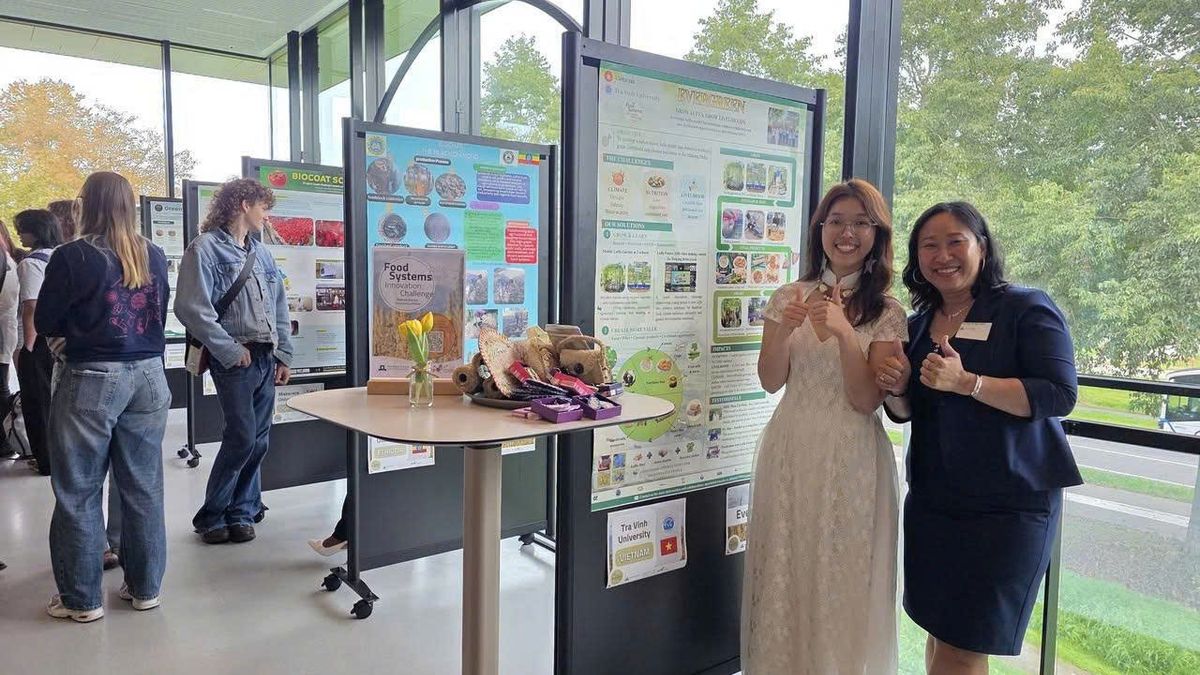
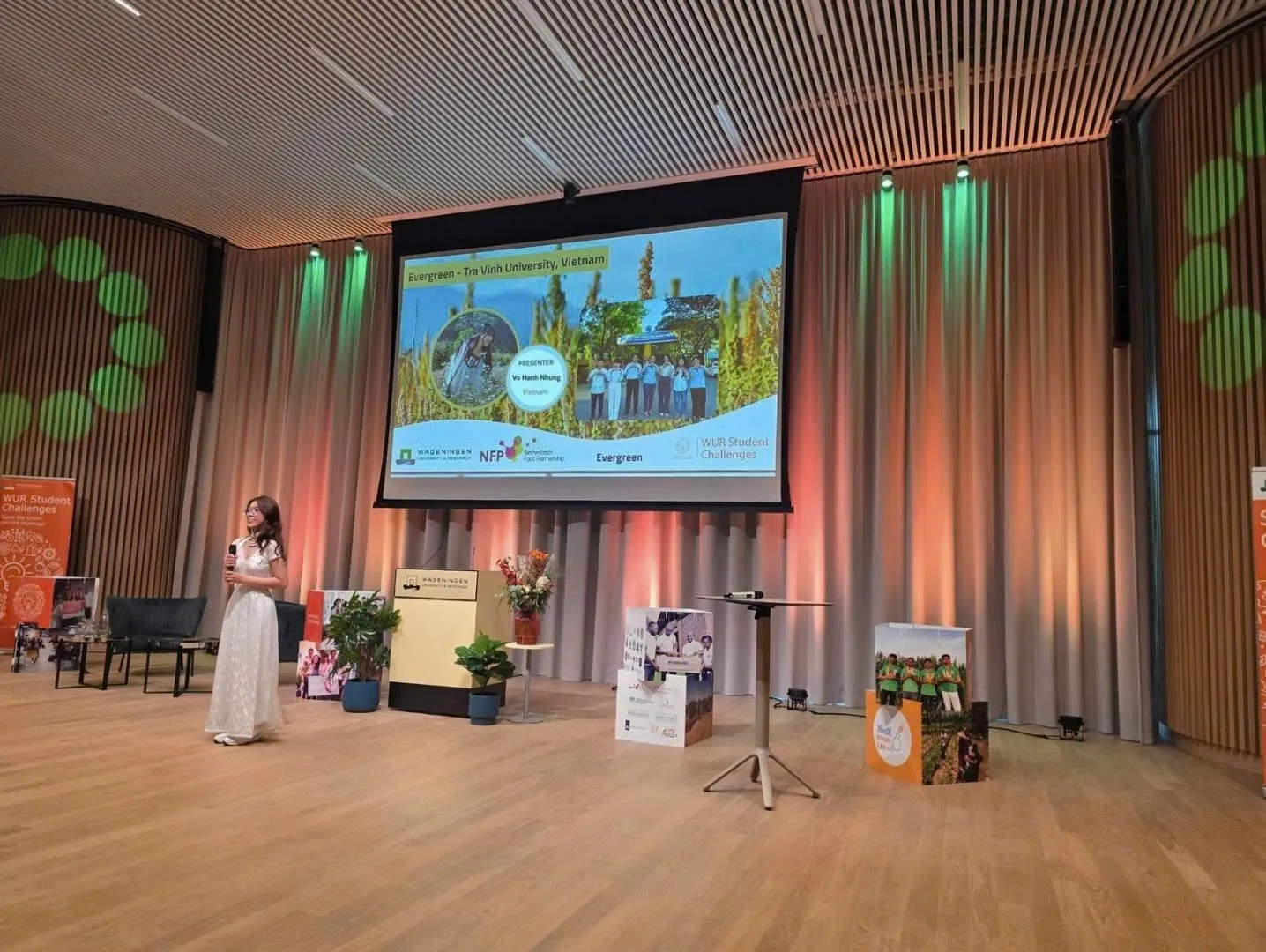
From September 25 to October 1, 2026, a delegation from Tra Vinh University, led by Dr. Tran Thi Ngoc Bich, Director of the STARS Water Center – Tra Vinh University, together with student Vo Hanh Nhung, an English Language major, participated in the final round of the Food Systems Innovation Challenge 2026 at Wageningen University & Research (WUR), the Netherlands.
The journey not only provided an opportunity to showcase a student innovation from Tra Vinh University on an international platform, but also offered valuable opportunities for learning, cultural exchange, and networking with students, experts, and researchers from different countries.
From a Familiar Luffa Vine to a Community-Driven Innovation
The journey of the EverGreen team began with a simple question: How can a familiar crop of the Mekong Delta create greater value for local communities? In a region increasingly facing drought, saltwater intrusion, water scarcity, and livelihood challenges, the team chose the luffa vine—a nutritious crop well suited to local conditions and one that can be utilized at different stages of growth—as the centerpiece of their initiative. Although luffa is a familiar part of local diets, its value has largely remained centered on the use of its fresh fruit. The team therefore sought to expand the value of the luffa plant, transforming a familiar crop into a solution that connects climate change adaptation, nutrition, and livelihoods.
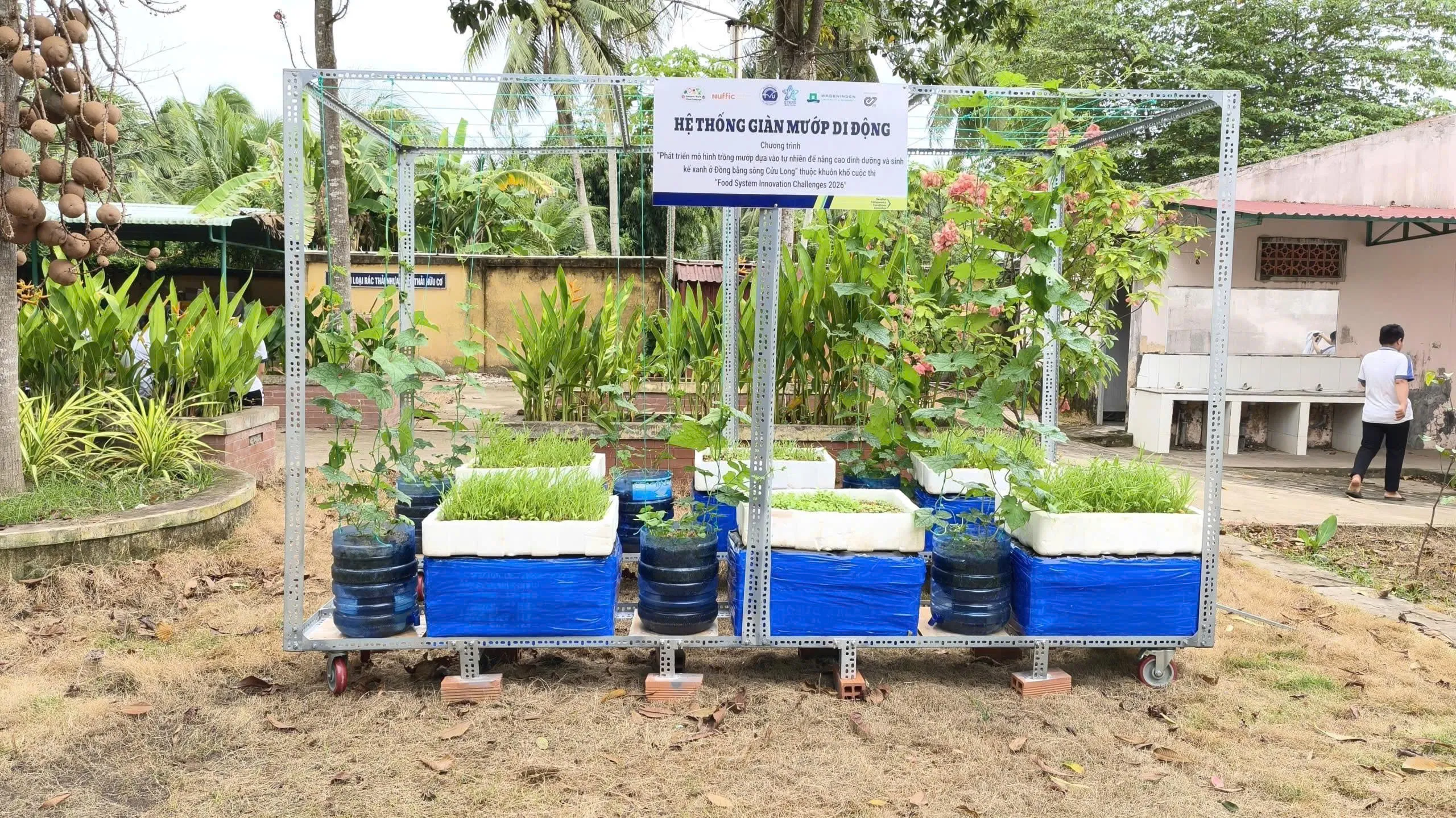
One of the team's key initiatives is the Mobile Semi-Hydroponic Luffa Garden. The model grows luffa in small spaces while making use of recycled materials and water-saving cultivation techniques. Implemented at Tra Vinh University and Luong Hoa A Secondary and High School, the model not only provides a source of fresh vegetables but also serves as a hands-on learning space, enabling students to explore nutrition, sustainable agriculture, environmental protection, and climate change adaptation through practical experience.
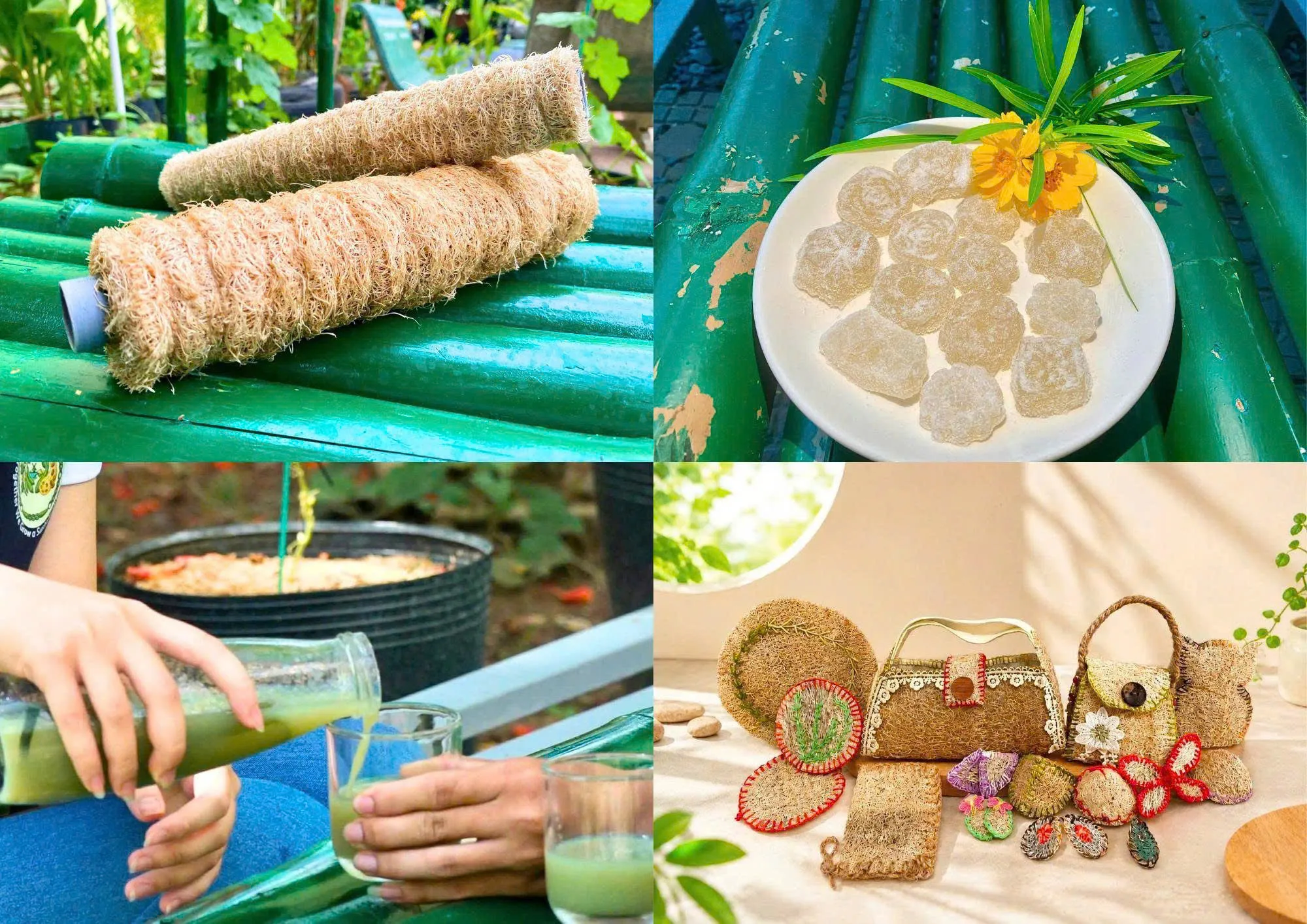
Alongside the cultivation model, the team is developing a circular luffa value chain, making use of different parts of the plant to create additional value and minimize waste. Young luffa fruits and leaves are being explored for the development of food products, while mature luffa fruits are processed for their natural fiber to create value-added products such as handicrafts and applications in water filtration technology. Plant residues and by-products are further processed into organic fertilizer.
Through this approach, the team is exploring diverse uses of the luffa plant and creating new opportunities to generate value for communities across the Mekong Delta.
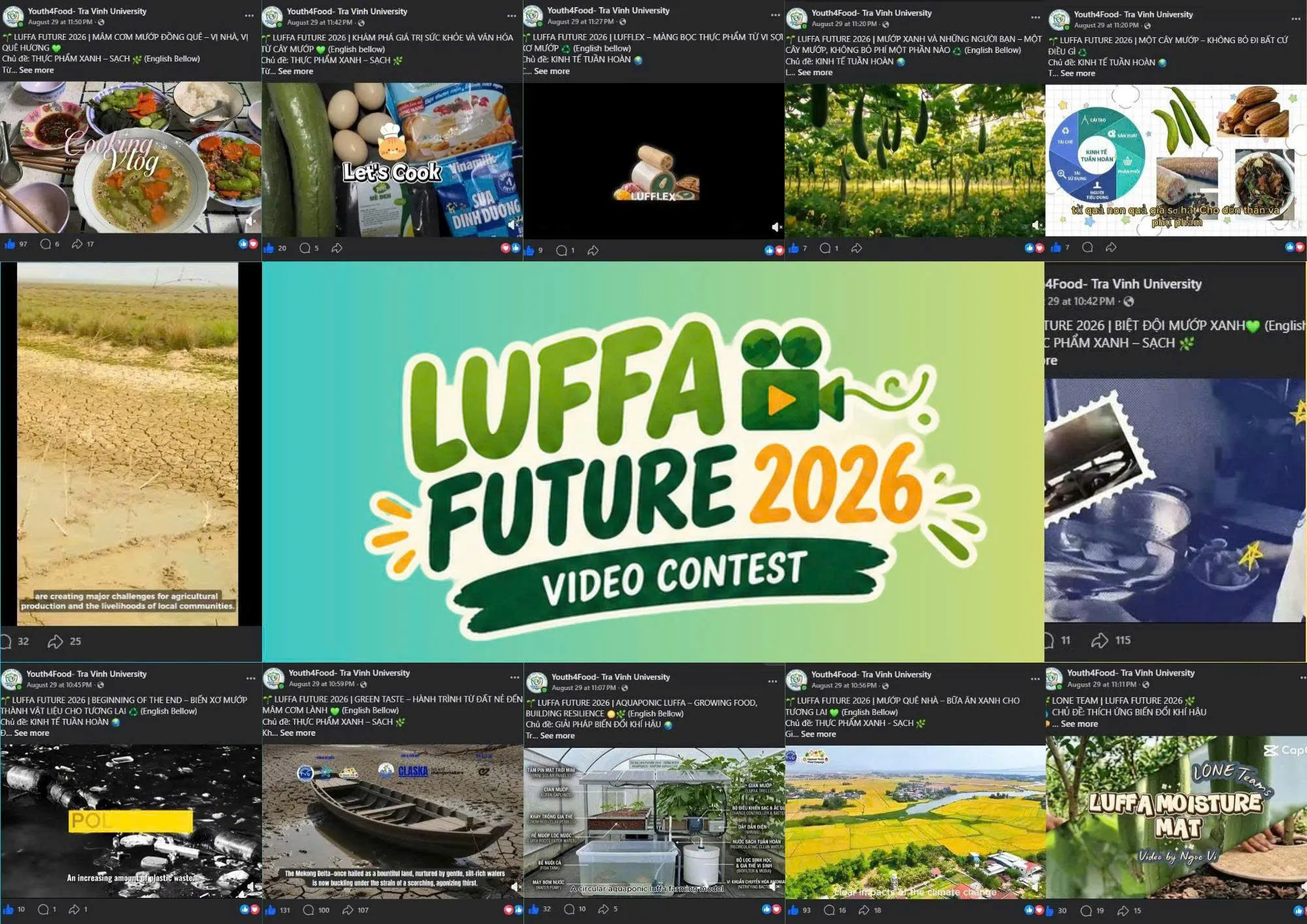
Alongside their research and pilot activities, the team collaborated with Empower Youth for Food (EY4F) and Tra Vinh University to organize the Luffa Future 2026 video design competition, creating a platform for young people across the Mekong Delta to share creative ideas on healthy food, climate change adaptation, and the circular economy.
Through this initiative, the story of the luffa plant has helped inspire young people and foster a spirit of innovation and creative action within the community.
From the first pilot activities in their local community, the team gradually refined their idea and advanced to the final round of the Food Systems Innovation Challenge 2026, bringing together 30 teams from 15 countries around the world.
Bringing the Mekong Delta Story to Wageningen
At Wageningen University & Research (WUR), student Vo Hanh Nhung, representing the EverGreen team, presented the project alongside international teams, experts, and guests of the competition. From a familiar luffa plant growing in gardens across the Mekong Delta, the story of a locally rooted crop and the value that can be created from it was brought to one of the world's leading environments for agricultural and food systems research.
Behind this journey was the continuous support, guidance, and mentorship of Dr. Tran Thi Ngoc Bich, who helped the team progressively refine its idea, translate it into practical activities, and confidently bring the student innovation from Tra Vinh University to an international platform.
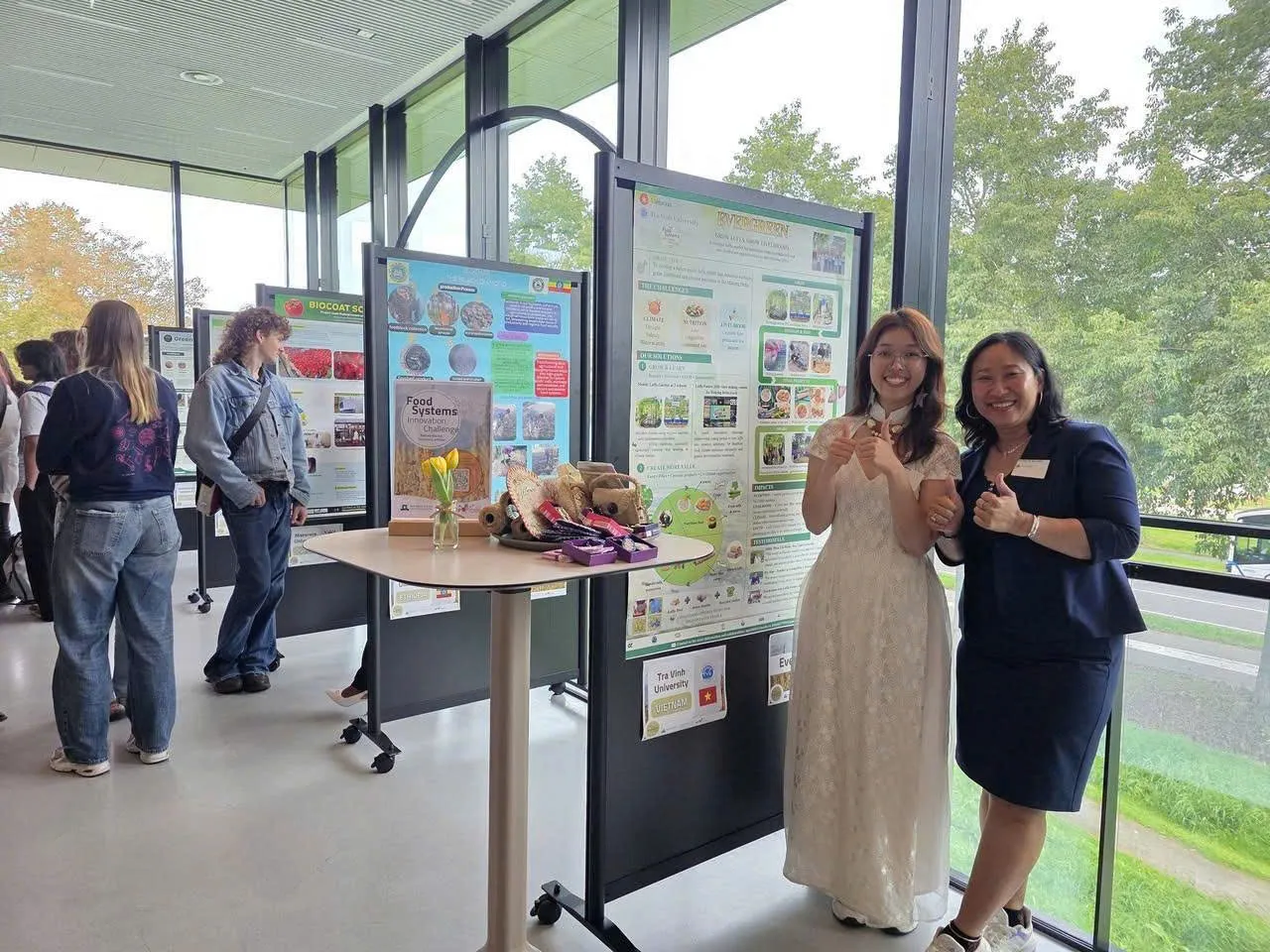
Wageningen – Learning and International Connections
The seven-day journey in the Netherlands was not only an opportunity to take part in the final round of the competition, but also a valuable learning and hands-on experience at Wageningen University & Research (WUR). By learning and engaging alongside students and experts from different countries, the delegation had opportunities to exchange ideas and share stories about their hometowns, agriculture, and food.
Through these interactions, the story of the Mekong Delta, the luffa plant, and the EverGreen journey reached international friends, while also opening up new connections and opportunities for learning and collaboration in the future.
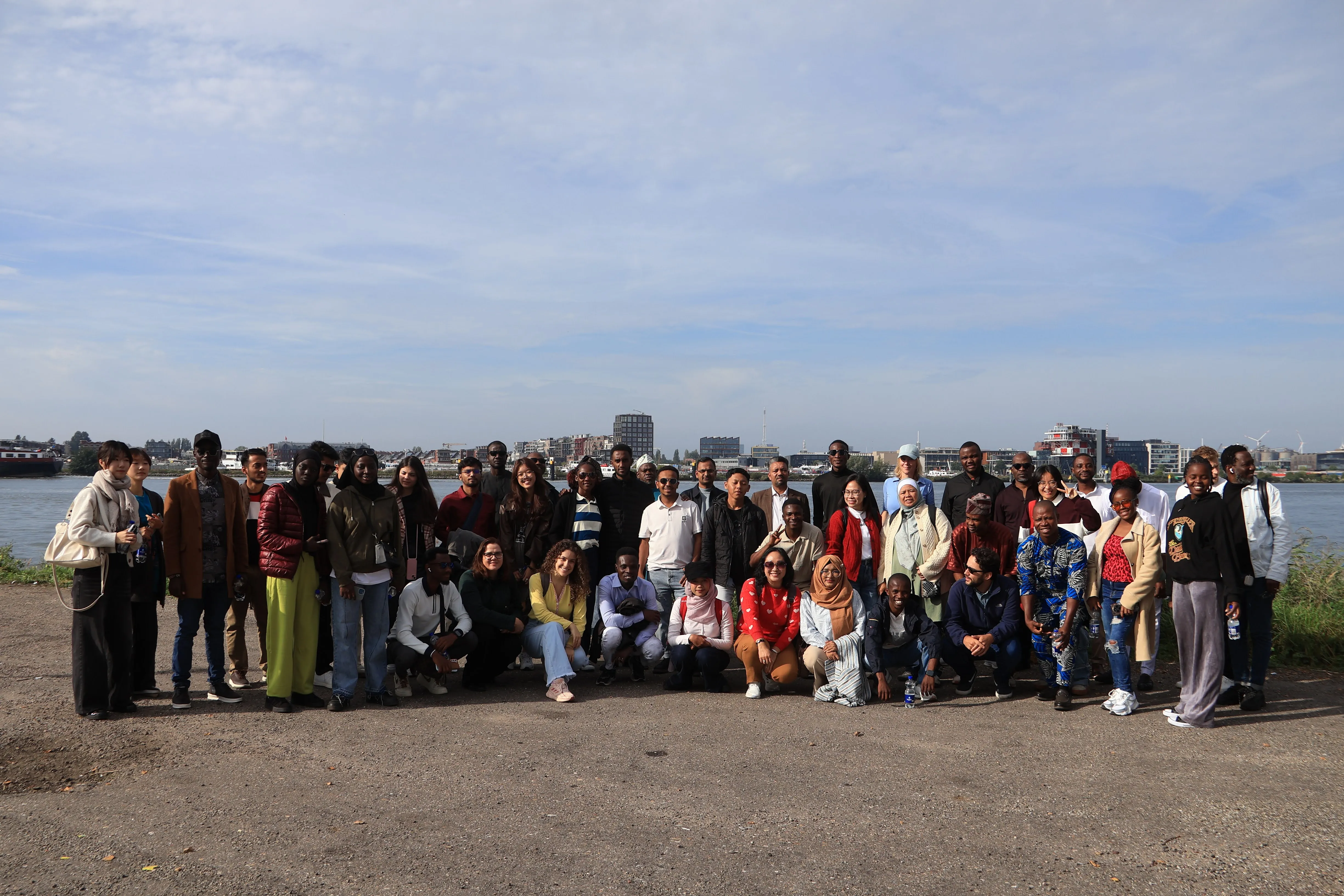
The journey not only broadened the learning experiences and international connections of Tra Vinh University students, but also helped bring innovations rooted in the realities of the Mekong Delta closer to the international community. It created further opportunities for learning and collaboration while helping promote solutions toward a greener and more sustainable food system for the region.