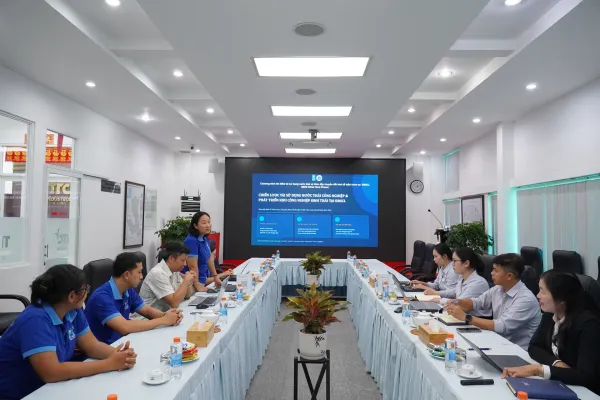
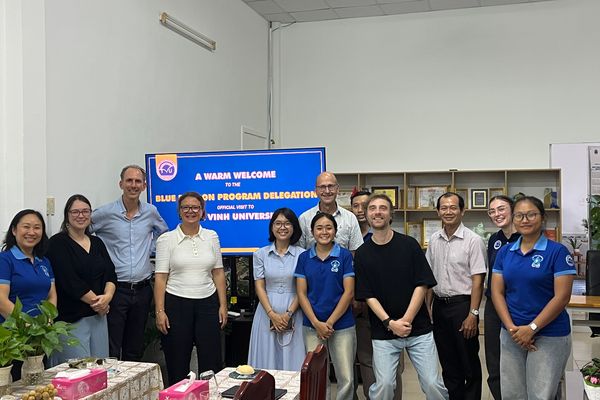
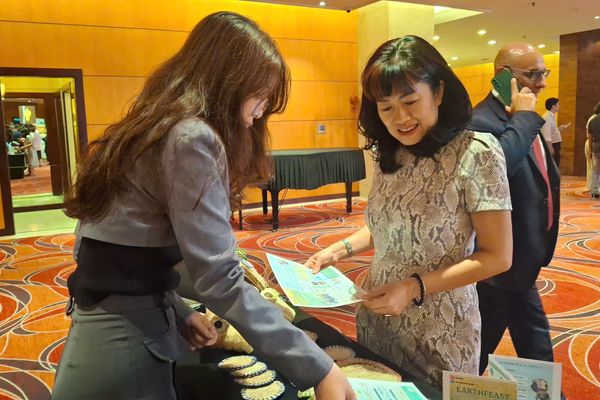
KICK-OFF MEETING | Launch of the Pilot Program on Industrial Wastewater Reuse and Circular Economy in the Mekong Delta
On August 12, 2026, the Kick-off Meeting marking the official launch of the program “Piloting Industrial Wastewater Reuse and Promoting the Transition toward a Circular Economy in the Mekong Delta” was successfully held. As part of the ACE-Biz (MRD Water Next Phase) initiative, the program represents a joint effort to address environmental challenges, strengthen resilience to drought, and protect ecosystems across the region.
Strategic Partnerships & Implementation Roadmap
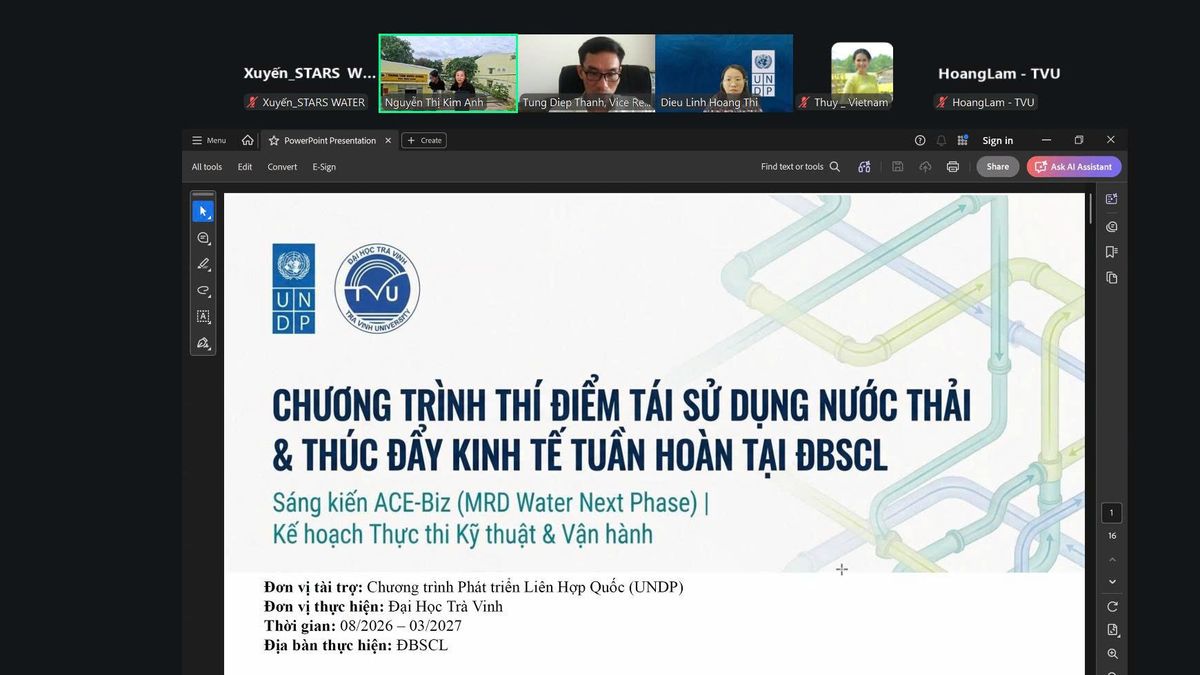
The program is funded by the United Nations Development Programme (UNDP) in Viet Nam and the Embassy of the Netherlands, and is led by Tra Vinh University, through the STARS Water Center. The project also benefits from technological support from its international partner, Saxion University of Applied Sciences, the Netherlands, with technical expertise from Professor Harry Futselaar.
Running from August 2026 to April 2027, the program will conduct a large-scale assessment involving more than 60 businesses and Industrial Park Management Boards across the key areas of Tay Ninh, Vinh Long, and Dong Thap. Based on the assessment findings, the program will propose sustainable policy frameworks for water resource governance and develop a Technical Guidance Manual to support the standardization and wider adoption of water reuse practices.
Technical Focus: Mobile Technology & the “Fit-for-Use” Approach
A key technological component of the program is the pilot operation of a mobile Nanofiltration (NF) membrane system with a capacity of 200–300 liters per hour. The system is designed to treat wastewater to appropriate quality levels for a range of applications, from non-production to production purposes, following three levels:
Level 1 – Non-production applications:
Treated water for landscape irrigation, road cleaning, and toilet flushing.
Level 2 – Technical support applications:
Water softening, cooling tower make-up water, and equipment cleaning.
Level 3 – Advanced applications:
High-quality treated water for boiler feedwater and selected production processes.
Four Strategic Benefits for Participating Businesses
Participation in the program not only enables businesses to contribute to sustainable development goals but also offers significant operational and economic benefits.
1. Ensuring Business Continuity
Reducing water security risks: Water reuse enables businesses to become more resilient to regional water allocation challenges and increasing drought risks.
Strengthening resilience: Partial on-site water self-sufficiency can help businesses maintain continuous production when external water supplies are disrupted or constrained by climate-related impacts.
2. Optimizing Operating Costs (OPEX)
“Fit-for-Use” water quality: Instead of treating all wastewater to the highest quality level regardless of need, businesses can apply different treatment levels according to specific end uses. For example, basic treatment may be sufficient for irrigation, while NF membrane treatment can be applied for cooling-related purposes, significantly reducing chemical and energy consumption.
Dual cost savings: Water reuse reduces the volume of freshwater that businesses need to purchase while also decreasing wastewater discharge volumes, potentially reducing associated environmental protection fees.
3. Benefits from Advanced Technologies
Extending equipment lifespan: NF membrane treatment can reduce hardness-causing ions such as Ca²⁺ and Mg²⁺, as well as dissolved solids, helping control scaling and corrosion in cooling towers and boiler systems. This can contribute to lower maintenance and equipment servicing costs.
Access to technical expertise and optimized services: Participating businesses will receive support in water auditing, technical training, and system operation from the STARS Water Center at Tra Vinh University, helping establish more systematic and cost-effective environmental management practices.
4. Enhancing Brand Value and Competitive Advantage
Supporting the transition to a circular economy: Integrating water reuse into long-term business strategies can help companies respond more effectively to increasingly demanding sustainability requirements in international markets, including the Netherlands and the EU, while strengthening their position in global supply chains.
Transparent economic assessment: During the pilot phase, the program will develop CAPEX/OPEX assessments and techno-economic performance reports to help businesses better understand investment requirements, payback periods, and potential financial returns. These assessments can also provide evidence of environmental and economic benefits, supporting access to potential financial assistance and investment opportunities.
From Environmental Responsibility to Competitive Advantage
Industrial wastewater reuse is increasingly evolving from an environmental protection concept into a strategic competitive advantage for businesses. The launch of this pilot program marks an important step toward developing practical and scalable approaches to water reuse and circular water management, opening a new chapter for sustainable industrial development in the Mekong Delta.